Table of Contents
Somewhere out there, a parks-and-rec director is staring at an electrician’s trenching quote and quietly reconsidering their life choices. If that’s you, welcome,solar arena lighting has come a long way from the dim, flickery garden lights people picture when you say “solar.”
This guide is built around one specific job: lighting sports fields and courts, not driveways. We pulled specs from manufacturers, cross-checked them against independent product reviews, and leaned on IES (Illuminating Engineering Society) lighting standards to figure out what actually works, ranked specifically for sports fields and courts, not general security lighting. Every number below traces back to a real source, listed at the end. Updated for 2026.
Quick Comparison Table, Best Solar Arena Lights for Sports Fields
| Product | Best For | Lumens | Coverage | Run Time | Waterproof Rating | Price |
|---|---|---|---|---|---|---|
| TENKOO Solar Powered Lights | Overall / Large Fields | ~50,000–60,000 | Up to ~3,437 ft² | Up to 12 hrs | IP66 | Premium |
| TENKOO (multi-pole array) | Football & Soccer Fields | ~250,000+ combined | Full field | Up to 12 hrs | IP66 | Premium (multi-unit) |
| TENKOO (multi-pole array) | Baseball & Softball Diamonds | ~250,000+ combined | Full diamond | Up to 12 hrs | IP66 | Premium (multi-unit) |
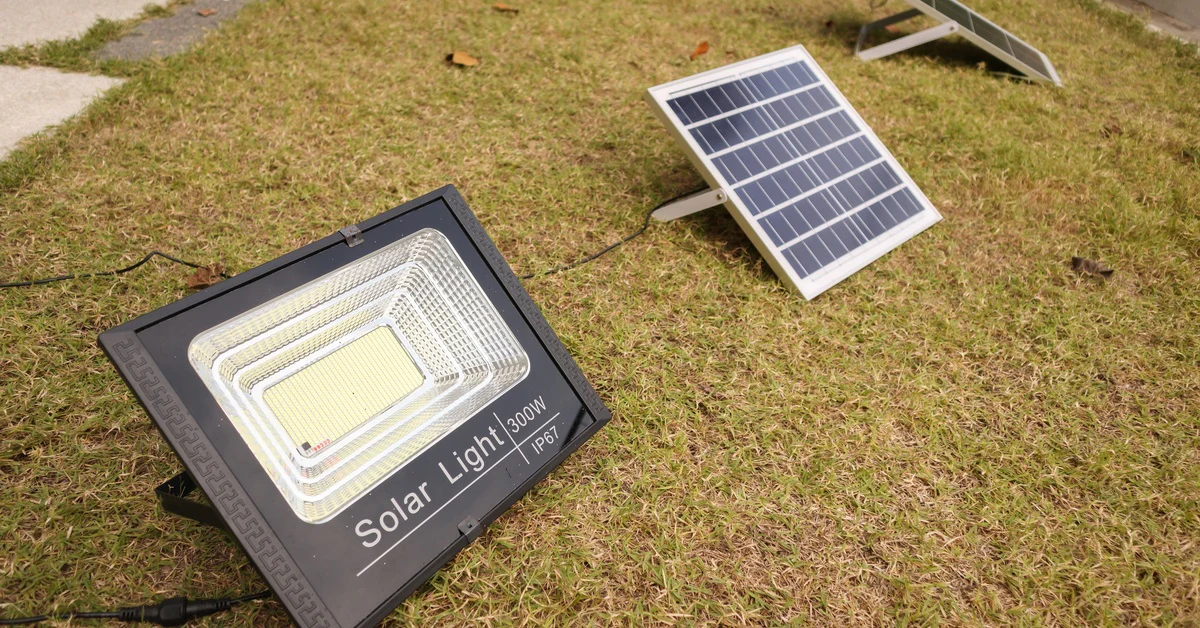
| NiorSun Solar Arena Lights | Basketball & Tennis Courts | ~10,000 | ~4,500+ ft² (multi-unit) | Up to 14 hrs | IP67 | Mid-range |
| AmeriTop Solar Powered Lights | Best Budget Pick | ~800 | Up to 800 ft² | Up to 9 hrs | IP65 | Budget |
| Richarm Dual Solar Lights | Multi-Use / Covered Facilities | ~500 per head | Up to 430 ft² | Up to 10 hrs | IP65 | Mid-range |
The Best Solar Arena Lights, Reviewed
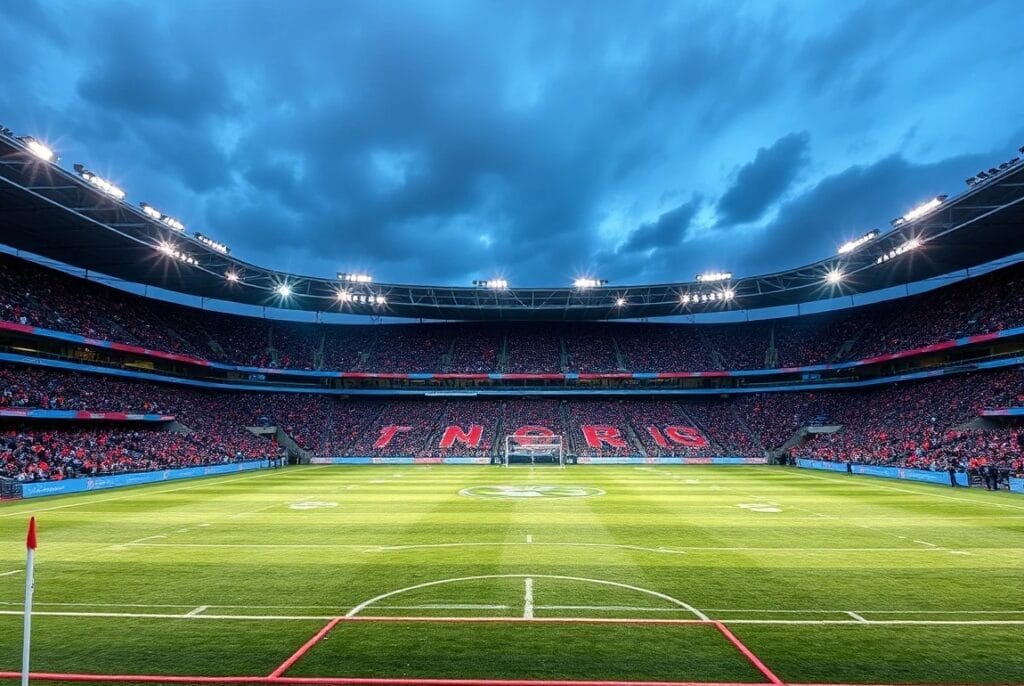
TENKOO Solar Powered Lights: Best Overall for Sports Fields
Key Features:
- Material: Aluminum
- Lumens: ~50,000–60,000
- Solar Panel: 70 watts
- Run Time: Up to 12 hours
- Beam Angle: 120 degrees
- Waterproofing: IP66
TENKOO shows up near the top of almost every serious comparison, and the spec sheet explains why. We’re talking 50,000–60,000 lumens off a 70-watt panel and a battery big enough for 12 hours of run time, wrapped in an aluminum, IP66-rated housing with a 120-degree beam angle.
Pros: Very high lumen output, strong waterproofing, multiple brightness modes, remote control included.
Cons: Premium price, and you’ll need to buy a mounting pole separately.
TENKOO Multi-Pole Array: Best for Football & Soccer Fields
Key Features:
- Per-Unit Lumens: ~50,000–60,000 (TENKOO)
- Recommended Config: Multiple units around field perimeter
- Combined Target: ~250,000+ lumens for recreational-level play
- Waterproofing: IP66 per unit
Here’s where we’re going to be straight with you instead of pretending a single fixture can do a stadium’s job. Earlier in this guide, the math worked out to roughly 250,000 total lumens just to meet recreational-level brightness on a standard football field, and professional fields climb into the millions. No single product on the market gets you there alone, TENKOO included.
The honest answer is a multi-pole array, several TENKOO-class units spaced around the field perimeter the same way traditional stadium lighting is laid out. It’s not the flashy pick, but it’s the accurate one.
Pros: Fully scalable to any field size; no trenching or grid tie-in required for any of the poles.
Cons: Higher total cost than a single fixture, and more planning needed around pole placement and light uniformity.
TENKOO Multi-Pole Array: Best for Baseball & Softball Diamonds
Key Features:
- Per-Unit Lumens: ~50,000–60,000 (TENKOO)
- Recommended Mounting Height: ~70 ft for regulation diamonds
- Combined Target: ~250,000+ lumens for recreational-level play
- Waterproofing: IP66 per unit
Baseball and softball diamonds bring their own complications, deep outfields, high pop-fly visibility needs, and infield precision that punishes uneven lighting. The same multi-unit logic applies here, with one added wrinkle: regulation fields with 90-foot base paths often need mounting heights around 70 feet to get even coverage across the larger outfield.
Pros: Solar avoids running conduit across an entire outfield, a genuine cost and disruption saver.
Cons: Taller mounting heights typically require professional installation, adding to project cost.
NiorSun Solar Arena Lights: Best for Basketball & Tennis Courts
Key Features:
- Lumens: ~10,000
- Run Time: Up to 14 hours
- Waterproofing: IP67
- Control: Remote included
Think of NiorSun as the sensible middle child: 10,000 lumens, an IP67 rating (a step up from most competitors), and a battery that reportedly stretches to 14 hours. That combination fits courts well, where you need solid brightness but not football-field firepower.
Pros: Long run time, higher IP rating than most competitors, remote control included.
Cons: Reviewers have flagged the mounting bracket as a little fussy on angled installs.
AmeriTop Solar Powered Lights: Best Budget Pick
Key Features:
- Lumens: ~800
- Beam Angle: 270 degrees
- Run Time: Up to 9 hours
- Waterproofing: IP65
At around 800 lumens with a wide 270-degree spread, AmeriTop isn’t trying to light a stadium. It’s trying to be cheap and easy, and it succeeds at both.
Pros: Low price, wide beam angle, straightforward setup.
Cons: Lower lumen output limits it to smaller spaces.
Richarm Dual Solar Lights: Best for Multi-Use / Covered Facilities
Key Features:
- Lumens: ~500 per head
- Color Temperature: 6,500K (daylight)
- Run Time: Up to 10 hours
- Waterproofing: IP65
Richarm’s dual-head design is aimed at covered courts, where the 6,500K color temperature (basically daylight) matters more than it would outdoors, since there’s no actual sun helping you see the ball. The adjustable heads let you aim precisely instead of hoping one fixed beam covers everything.
Pros: Daylight-matching color temperature, adjustable dual heads for precise aiming.
Cons: Lower total output means it suits smaller covered spaces better than open fields.
How Many Lumens Do You Actually Need for Your Field or Court?
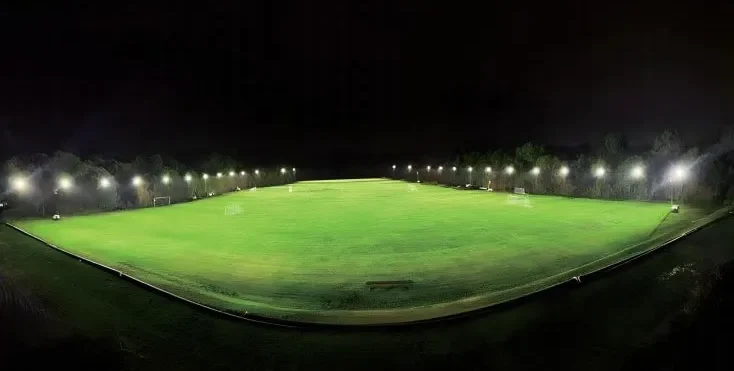
Guessing on lumens is how projects end up over budget or under-lit. Here’s what IES guidance actually says, broken down by use.
Football & Soccer Fields (Lumens Required)
Recreational fields generally target 20–30 foot-candles under IES guidance. For a standard-size recreational field (around 5,000 square feet of playing surface), that works out to roughly 250,000 total lumens using the standard 10.76 lumens-per-square-foot conversion. Professional, broadcast-level fields require dramatically more, into the millions of lumens across a multi-pole array.
Baseball & Softball Diamonds (Lumens Required)
Baseball fields follow similar IES class structures, with recreational-level play sitting around 20–30 foot-candles and competitive levels climbing from there. Regulation fields with 90-foot base paths often require luminaire mounting heights around 70 feet to achieve even coverage across the larger outfield area.
Basketball & Tennis Courts (Lumens Required)
Courts are smaller and more contained, so total lumen requirements are far lower than a full field, generally low thousands to tens of thousands of lumens depending on court size and competition level, which is exactly why a mid-output fixture like NiorSun handles courts well without needing a football-field-scale array.
General Recreation Areas (Lumens Required)
Parks, walking paths, and general recreation spaces typically need far less than any competition-level sports surface. Smaller units, the Aootek or AmeriTop tier, are usually more appropriate here than field-scale fixtures, both for coverage needs and cost efficiency.
Solar vs. Grid-Powered Field Lighting: Real Cost Comparison
Upfront Installation Cost
Grid power isn’t free just because you already pay for electricity at home. Getting power to a field means trenching, and trenching is where budgets go to die. Industry cost estimates put trenching anywhere from $4 to $30+ per linear foot depending on soil, surface, and whether you’re cutting through pavement. One solar lighting industry cost breakdown estimated a single grid-connected light’s total installation, trenching, transformer work, wiring, at around $3,950. The equivalent solar installation, just setting a pole and mounting the fixture, ran about $750.
For a commercial-grade solar light, setting the pole and installing the solar assembly typically runs $500 to $2,500+ per pole depending on site conditions, often less than the grid-connection cost once trenching is factored in.
5-Year and 10-Year Energy Savings
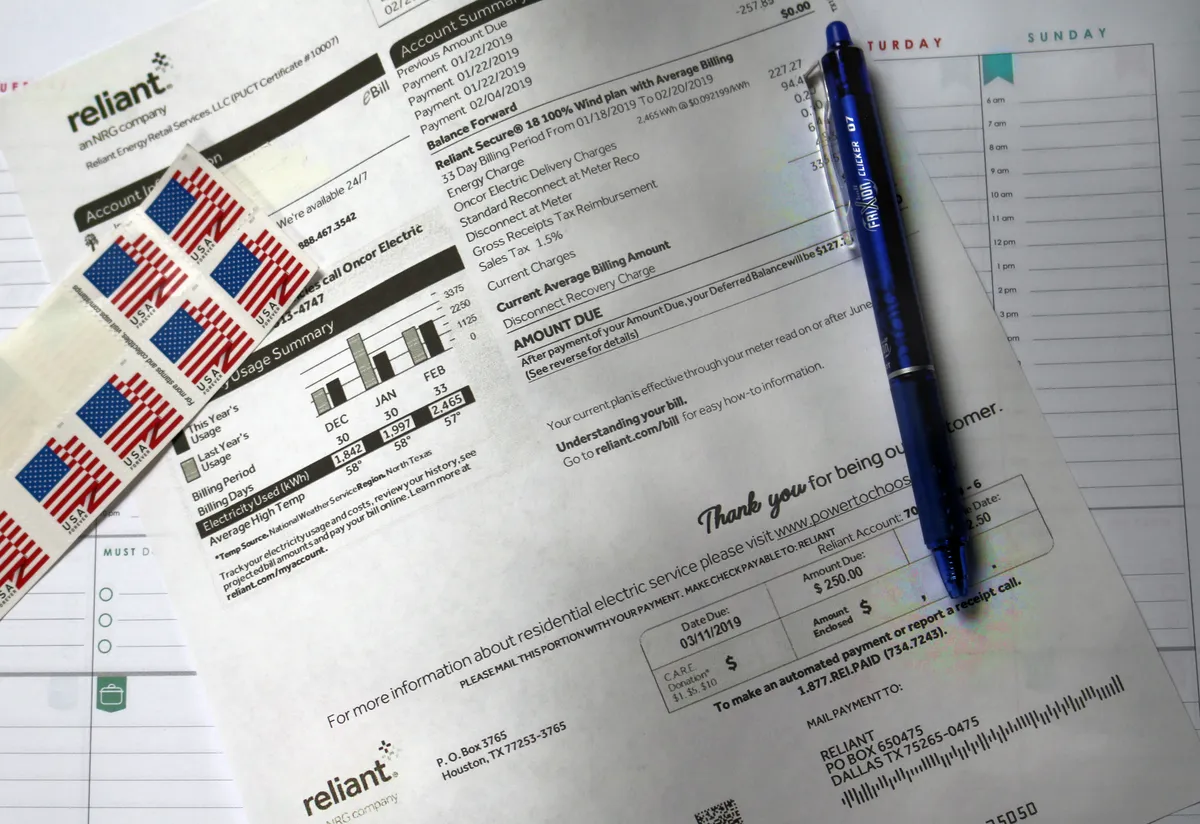
Grid-powered lighting keeps racking up utility charges long after installation is done. One industry cost example calculated a single 250-watt grid-powered light at roughly $236 a year in electricity at typical national rates, compounding to nearly $6,000 over 25 years for just one fixture — and that’s before future rate increases. Solar fixtures have no ongoing electricity cost once installed, since sunlight doesn’t send invoices.
Maintenance Cost Differences
Grid-connected systems require ongoing electrical maintenance, breakers, wiring inspections, repairs if a line gets damaged. Solar systems trade that for occasional battery and panel upkeep, skipping the electrical inspection and utility-connection overhead entirely, which matters most for larger, multi-pole installations like sports fields.
How to Choose Solar Arena Lights for a Sports Field
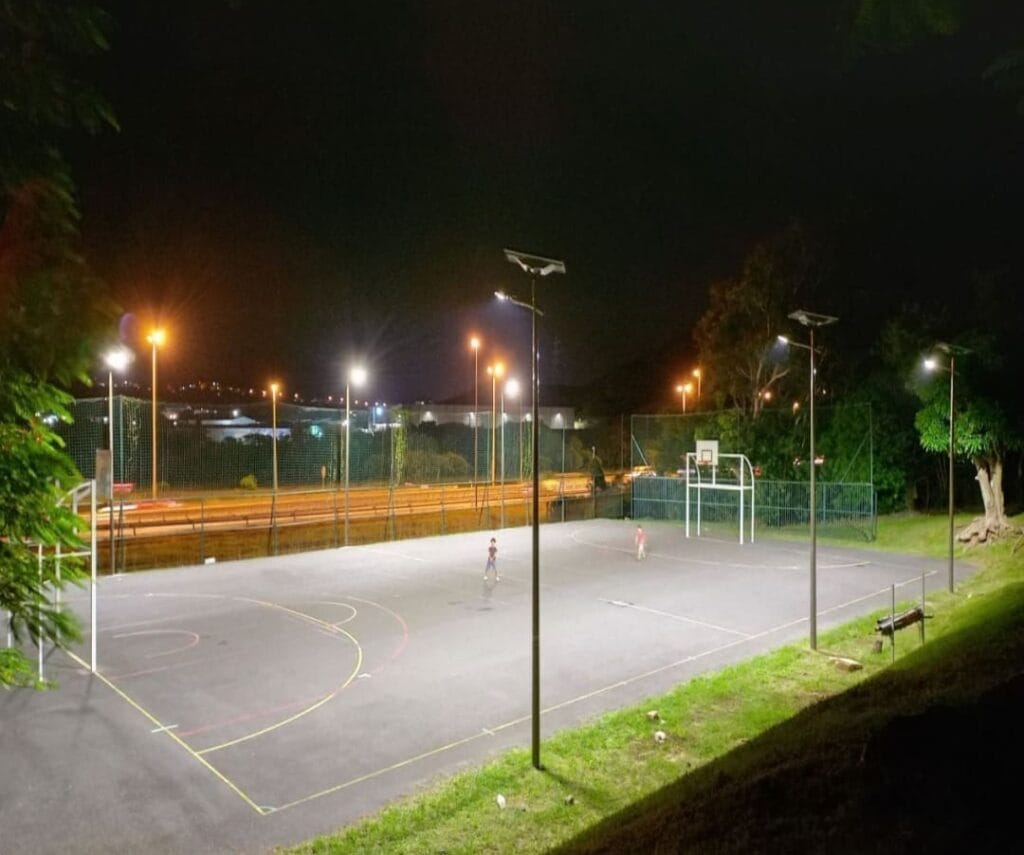
1. Field Size & Layout
Measure your actual playing surface before shopping. A tennis court and a football field are not the same purchase.
2. Brightness (Lumens per Square Foot for Sports Use)
Match lumens to your competition level using the IES foot-candle ranges above, rather than assuming brighter is automatically better.
3. Beam Angle & Light Coverage
Wider beam angles cover more ground but spread the light thinner, balance angle against how many units you’re installing.
4. Run Time & Battery Capacity
Check real-world run time reports, not just the marketing figure, especially if games run late into the evening.
5. Charge Time & Sunlight Requirements
Shorter charge times matter more in regions that don’t get consistent sun year-round, particularly through winter months.
6. Color Temperature (Visibility for Players vs. Spectators)
Daylight-range color temperatures (around 5,000–6,500K) tend to improve visibility for fast-moving play and are easier on spectators’ eyes than warmer tones.
7. Mounting Height & Pole Requirements
Field lighting typically needs poles in the 15–20+ foot range, with taller requirements for baseball outfields specifically.
8. Weatherproofing (IP Rating)
Look for at least IP65 for outdoor sports use, fields see more rain, dust, and temperature swings than a backyard ever will.
9. Warranty & Durability
A 1–2 year warranty is a reasonable minimum for equipment left outdoors year-round in variable weather.
Installation Considerations for Schools & Municipal Fields
Permit & Regulatory Notes
Many municipalities require permits for pole installations and outdoor lighting, even without trenching involved, check with your local authority before ordering equipment.
DIY vs. Professional Installation for Larger Fields
Smaller, single-unit installs (courts, walkways) are often DIY-friendly. Multi-pole field arrays, especially with taller mounting heights, generally call for professional installation to ensure structural safety and even light distribution.
Powering Multiple Lights Across a Full Field
Because each solar fixture generates and stores its own power, multi-pole field arrays don’t require the shared electrical infrastructure that grid systems do, each pole functions independently, which simplifies both installation and future expansion.
What Are Solar Arena Lights? (Definition Section)
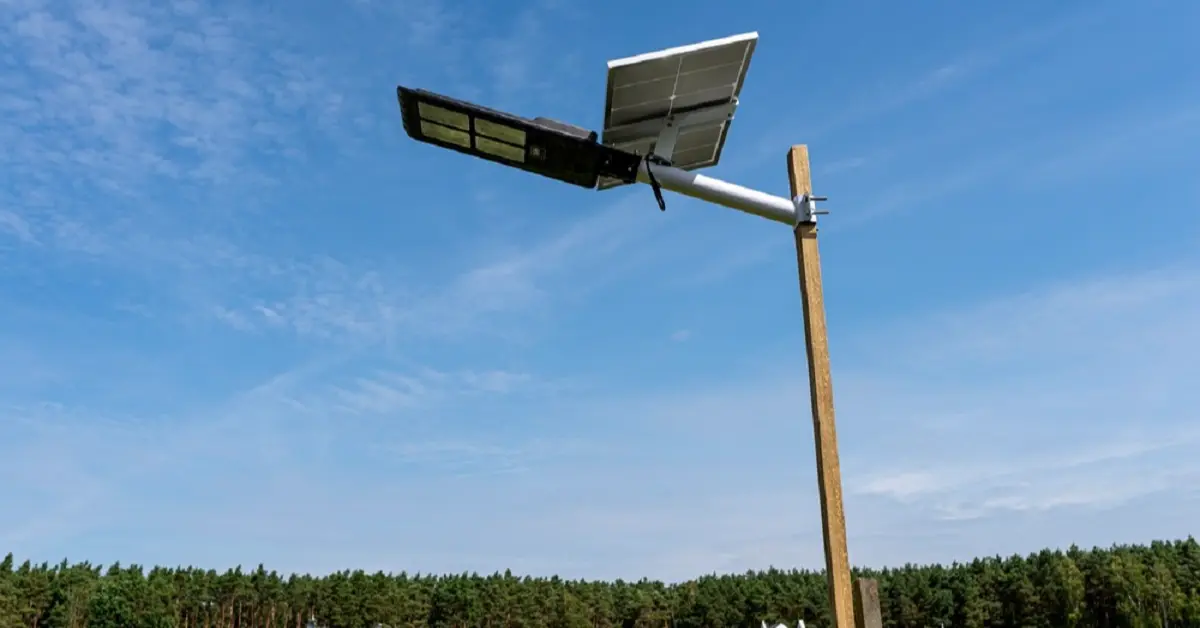
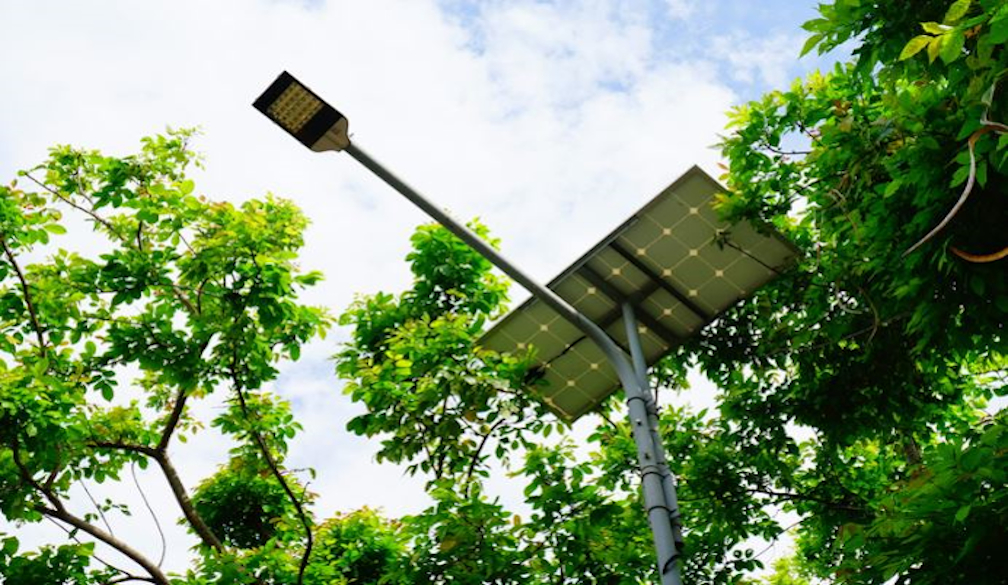
Strip away the marketing and it’s a simple idea: standalone LED lighting fixtures built for large outdoor spaces, sports fields, courts, and open arenas, powered entirely by an attached solar panel and rechargeable battery instead of a grid connection. They do the same job traditional arena lighting does, just without the wiring.
Advantages of Solar-Powered Sports Field Lighting
- No trenching or grid connection required a major cost and disruption saver for fields without nearby electrical infrastructure
- No ongoing utility bill for the lighting circuit itself
- Simpler installation compared to grid-tied systems, particularly for remote or expanding facilities
- Weather-resistant builds rated for outdoor conditions year-round
- Scalable add poles as a facility grows without new electrical infrastructure
FAQs
How many lumens do you need to light a football field?
Recreational fields generally need around 250,000 total lumens to meet IES-recommended brightness levels; professional fields require several million lumens across a full array.
How many lumens do you need to light a basketball court?
Courts need far less than a full field, typically low thousands to tens of thousands of lumens, depending on court size and competition level.
How many lumens do you need to light a baseball field?
Similar to football fields at the recreational level, though outfield areas often require taller mounting heights (around 70 feet for regulation diamonds) to maintain even coverage.
Are solar stadium lights bright enough for competitive play?
For recreational and school-level play, yes, when deployed in the right number and configuration. Professional, broadcast-level competition typically still relies on grid power due to the sheer lumen requirements involved.
How long do solar arena lights run on a single charge?
Most mid-to-high-end solar arena lights run 8–14 hours per charge, depending on brightness mode and battery size.
What’s the average cost of solar-powered arena lighting?
Per-pole installation for commercial-grade solar fixtures typically runs $500–$2,500+, compared to potentially several thousand dollars per pole for grid-connected lighting once trenching is included.
Can solar arena lights work in winter or low-sunlight regions?
Yes, though expect reduced run time. Larger battery banks help offset shorter winter daylight hours.
Do solar arena lights need a grid connection as backup?
No, that’s the core advantage. Each fixture operates independently using its own solar panel and battery.
What’s the difference between solar arena lights and solar stadium lights?
The terms are largely interchangeable; “stadium lights” tends to imply larger-scale installations, while “arena lights” often covers the mid-size fixtures used by schools and rec leagues.
What maintenance do solar arena lights require over time?
Occasional panel cleaning and battery checks are typically all that’s needed, far less than the electrical inspections grid-connected systems require.
Conclusion
If you’re lighting a full competition field, plan for a multi-pole array using high-output units like TENKOO rather than expecting one fixture to do the job. If you’re covering a court, walkway, or general recreation area, mid-range picks like NiorSun or budget-friendly options like Aootek and AmeriTop cover most needs without overspending. Either way, size your purchase to your actual foot-candle target and field dimensions, not the biggest lumen number on the box.