Table of Contents
You know those dark spots in your house. The hallway with no window. The bathroom that needs a light at noon. The closet where you cannot find your shoes.
A solar tube skylight fixes that.
No electricity. No wiring. No light bulbs that burn out.
Just a hole in your ceiling and a shiny tube that dumps sunlight into the room.
What is a solar tube skylight?
It is a tube. A round shiny tube. Goes from your roof to your ceiling.
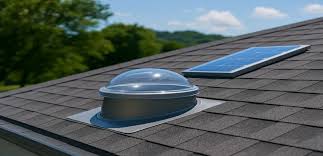
On the roof, a clear dome collects sunlight. The dome sits on your shingles like a small bubble.
Inside the dome, sunlight enters the tube. The tube is lined with mirror finish material. The light bounces down the tube. Comes out the other end into your room.
At your ceiling, a white diffuser spreads the light around. Looks like a regular light fixture. But no wires. No switch. Just sun.
Some people call them tubular skylights. Same thing.
How is it different from a regular skylight?
A regular skylight is a window on your roof. Big. Heavy. Needs a big hole. Needs framing. Needs drywall. Needs paint. Leaks are common.
A solar tube is small. The tube is 10 to 14 inches wide. The hole in your roof is small. The tube runs between your rafters. No framing needed. No drywall work. Less chance of leaks.
A regular skylight costs 2,000to5,000 installed. A solar tube costs 500to1,000. Less than half the price.
And a regular skylight lets in heat. Lots of heat. In summer, your room bakes. A solar tube has insulation in the tube. Less heat comes in.
Where do you put a solar tube?
Anywhere without a window.
Hallways. Dark inside all day. A solar tube turns the hall into a bright space.
Bathrooms. No window means you turn on the light even at noon. A solar tube gives you free light.
Closets. Walk in closets are often dark. A tube fixes that.
Laundry rooms. Basement laundry rooms get zero sun. A tube helps.
Stairwells. Stairs without windows are accidents waiting to happen. Put a tube above the stairs.
Pantries. Find your canned beans without a flashlight.
Home offices. If your office faces north, put a tube on the south roof. Get free light all afternoon.
Does it work at night?
No.
A solar tube brings in sunlight. No sun means no light.
Some models have an add on kit. A small LED light inside the tube. You wire it to a switch. At night, you flip the switch and the LED turns on. Uses the same ceiling fixture. Best of both worlds.
But the basic tube gives light only when the sun shines.
How much light does it give?
A 10 inch tube gives as much light as three 60 watt bulbs. That is about 2,500 lumens.
A 14 inch tube gives as much light as five 60 watt bulbs. About 4,000 lumens.
For a small bathroom, the 10 inch is plenty. For a large living room, get two tubes or go bigger.
The light changes with the sun. Morning sun gives warm light. Noon sun gives bright white light. Afternoon gives warm again. Cloudy days give less but still useful.
Does it work on cloudy days?
Yes but less.
On a fully cloudy day, a solar tube gives about 10 to 20% of normal light. That is still enough to see in a hallway. But not enough to read a book.
On a rainy day, almost nothing. But rainy days are dark anyway. You would turn on a light even with a window.
What about heat in summer?
Solar tubes are better than regular skylights. The tube has insulation. The dome on the roof blocks some UV and infrared. So less heat comes through.
But you still get some heat. On a 95 degree day, a solar tube adds a few degrees to the room. Less than a window. Much less than a regular skylight.
If heat is a big concern, buy a tube with a thermal break. Costs more but keeps heat out.
What about cold in winter?
The same insulation that blocks summer heat keeps winter heat inside your house. So a solar tube does not make your room colder.
The dome on the roof is double layered. Traps air. Works like a double pane window.
In very cold climates, frost can form on the dome. Wipe it off or let the sun melt it. Does not hurt the tube.
Does it leak?
Anything through your roof can leak. But solar tubes leak less than regular skylights.
The hole is small. The flashing kit seals around the dome. Good installation is the key. Hire someone who has done solar tubes before. Do not let a general roofer guess.
Ask for a warranty. Five years on parts. One year on labor is standard.
Can I install it myself?
Maybe. If you are handy, yes. If you are not, hire someone.
The job needs three skills. Cutting a hole in your roof. Cutting a hole in your ceiling. Running the tube between them without hitting rafters.
You also need to flash the dome correctly. Bad flashing means leaks. Leaks mean rot. Rot means expensive repairs.
If you do it yourself, watch three different YouTube videos first. Buy a kit that includes everything. The tube. The dome. The flashing. The ceiling diffuser. Read the manual twice.
How much does a solar tube skylight cost?
Kit price: $150 to $400. Depends on size and brand. A 10 inch basic kit is $150. A 14 inch kit with LED add-on is $400.
Installation: $300 to $600. Depends on your roof and how far the tube runs. A straight shot from roof to ceiling is cheap. A tube that needs bends is more.
Total installed: $500 to $1,000.
Compare to a regular skylight: $2,000 to $5,000. The tube is a bargain.
Does it add value to my house?
Yes but not a lot.
A solar tube is not like a kitchen remodel. It does not add $10,000 to your sale price.
But it makes dark rooms feel bigger. Buyers notice that. A bright hallway feels wider. A bright bathroom feels cleaner.
Real estate agents say a solar tube is a nice to have. Not a must have. But it helps.
What are the downsides?
You cannot turn it off. During the day, the light is on. Even if you want darkness. In a bedroom, that is a problem. People sleep during the day. Shift workers. Sick people. Babies.
The solution is a shade. Some kits include a sliding shade. Pull it closed when you want darkness.
Another downside. The light moves. At 9 AM, the light comes from one angle. At 3 PM, from another. You cannot aim it like a lamp. The light goes where the sun goes.
Third downside. No light at night. You need regular lights anyway.
Can I put one in a two story house?
Yes but harder.
The tube runs from your roof down to your first floor ceiling. That means it goes through your attic. Then through your second floor. Then into the first floor.
Longer tube means less light. The light bounces off the shiny walls. Each bounce loses a little light. For a two story run, get a 14 inch tube. The bigger tube keeps more light.
Also, the tube needs a clear path. No wires, pipes, or ducts in the way.
Brands to look for
Solatube is the big name. They invented the modern solar tube. Expensive but good. A 10 inch Solatube kit runs $400.
Velux makes them too. Velux is known for regular skylights. Their tubes are solid. Mid price.
Natural Light is the budget brand. $150 for a 10 inch kit. Works fine but the materials feel cheaper.
Read reviews before buying. Some cheap brands have dull tubing. Less shiny means less light.
FAQs
Q1: How long does a solar tube skylight last?
The tube itself lasts forever. The dome on the roof lasts 10 to 15 years. Sunlight makes the plastic brittle over time. Replace the dome when it gets yellow or cracks.
Q2: Does a solar tube skylight work in snow?
Yes but less. Snow on the dome blocks all light. Brush the snow off after a storm. Or install the tube on a steep roof where snow slides off.
Q3: Can a solar tube skylight start a fire?
No. The tube brings in light, not heat. The shiny lining reflects light. It does not concentrate it like a magnifying glass. No fire risk.
Q4: Do I need a building permit for a solar tube skylight?
Most cities say yes. Any hole in your roof needs a permit. Call your local building department. Permit costs 50to200.
Q5: Can I put a solar tube in a metal roof?
Yes. You need a different flashing kit. Metal roof flashing is made of rubber or special metal. Buy the right kit for your roof type.
Q6: How do I clean a solar tube skylight?
Clean the dome from the roof twice a year. Use soap and water. Do not use harsh chemicals. Inside the tube, dust builds up over years. Remove the ceiling diffuser and wipe the tube with a long duster.
Q7: Does a solar tube skylight work in a basement?
Yes but you need a different setup. The tube runs from your roof down through the house. For a basement, the tube is very long. Use a 14 inch tube to keep enough light. Or put a regular light in the basement and use the tube upstairs.
Q8: Can I add a solar tube to an existing light fixture hole?
Maybe. If the hole is the same size, yes. Remove the old light box. Fit the tube in its place. But the tube needs to go up to the roof. If the room is on the first floor with another floor above, you cannot.
Summary
A solar tube skylight brings free sunlight into dark rooms. It costs 500to1,000 installed. No electricity. No wiring. No bulbs. Works in hallways, bathrooms, closets, and laundry rooms. A 10 inch tube gives as much light as three 60 watt bulbs. A 14 inch tube gives as much as five. The tube does not work at night unless you buy an LED add on. It leaks less than regular skylights. It costs less than regular skylights. It adds less heat than regular skylights. For dark spaces with no windows, a solar tube is one of the best upgrades you can make.